
DeFi Industry Unites to Bail Out Aave
April 24, 2026 — Aave, Lido, EtherFi, Mantle and others coordinate crypto's first industry-wide bailout as $13B flees DeFi
A coalition of the largest protocols in decentralized finance has pledged more than $171 million in combined commitments over the past six days in an unprecedented scramble to recapitalize the DeFi ecosystem after a $292 million exploit of KelpDAO's rsETH left Aave with a bad-debt hole of up to $230 million.
The effort — being called "DeFi United" — is the first coordinated, multi-protocol bailout in DeFi's history. No DAO, token, or formal entity exists behind the name: it is a relief push organized by Aave's service providers and joined, one commitment at a time, by foundations, protocols and individuals racing to stop contagion before forced liquidations cascade across lending markets.
As of today, here is where the money stands:
✅ Firm Commitments (already executed or directly pledged)
These are contributions that don't require a DAO vote to happen — either because they're personal funds, foundation/treasury decisions already made, or direct emergency actions.
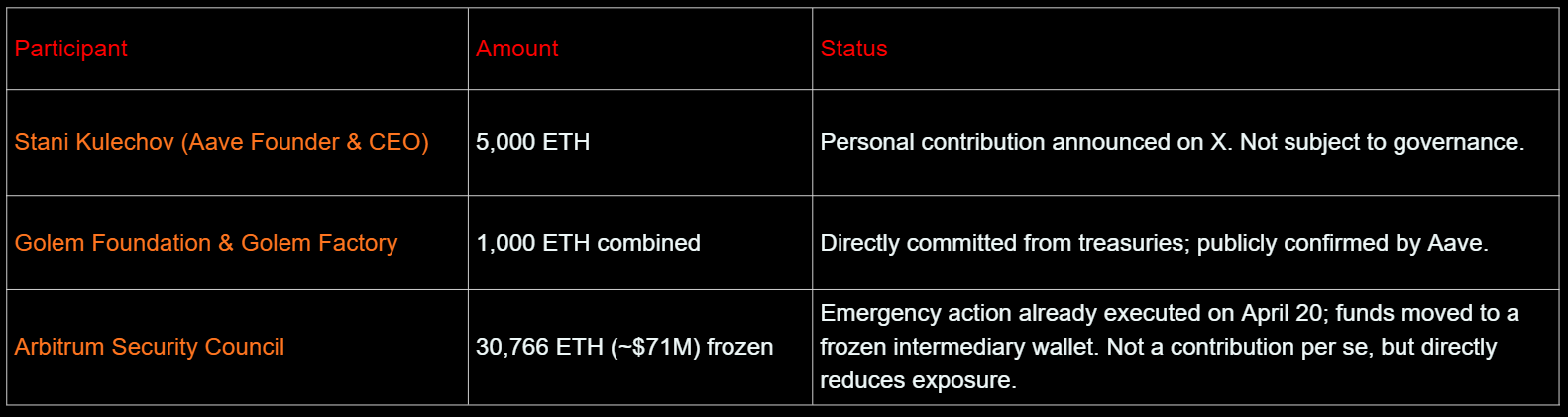
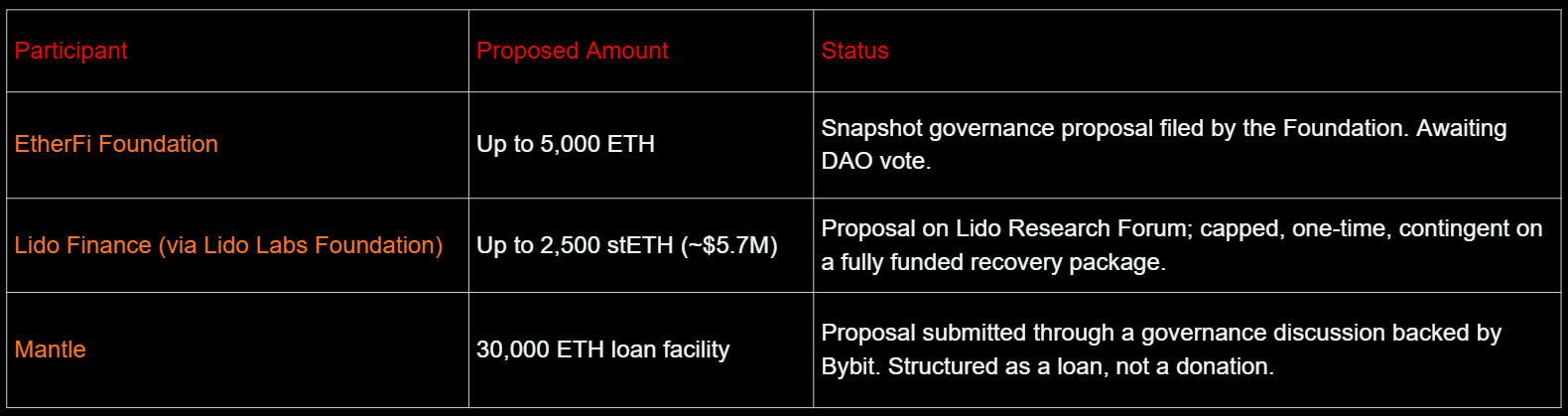
🟡 Pending DAO Proposals (proposed but not yet approved)
These are real proposals with real numbers, but they still require a successful governance vote from their respective DAOs before funds move.
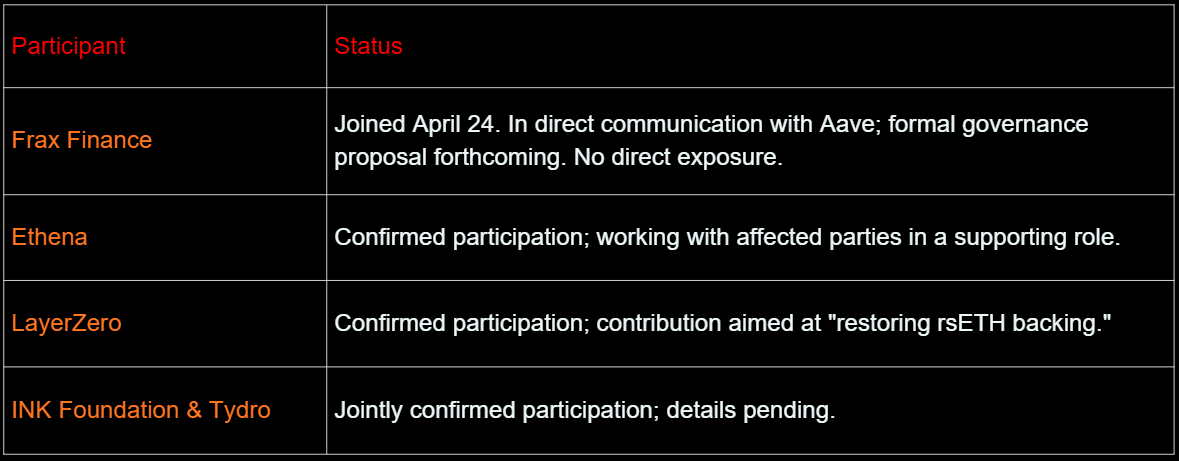
🟠 Verbal Commitments (participating, amounts TBD)
These participants have publicly confirmed they're joining DeFi United, but haven't yet disclosed amounts or filed formal proposals. Expect formalization in the coming days.
💰 The Running Total (At ETH's current ~$2,300 price):
Leaving aside the verbal (TBD) commitments, here's where the math lands at ETH's current ~$2,300 price:
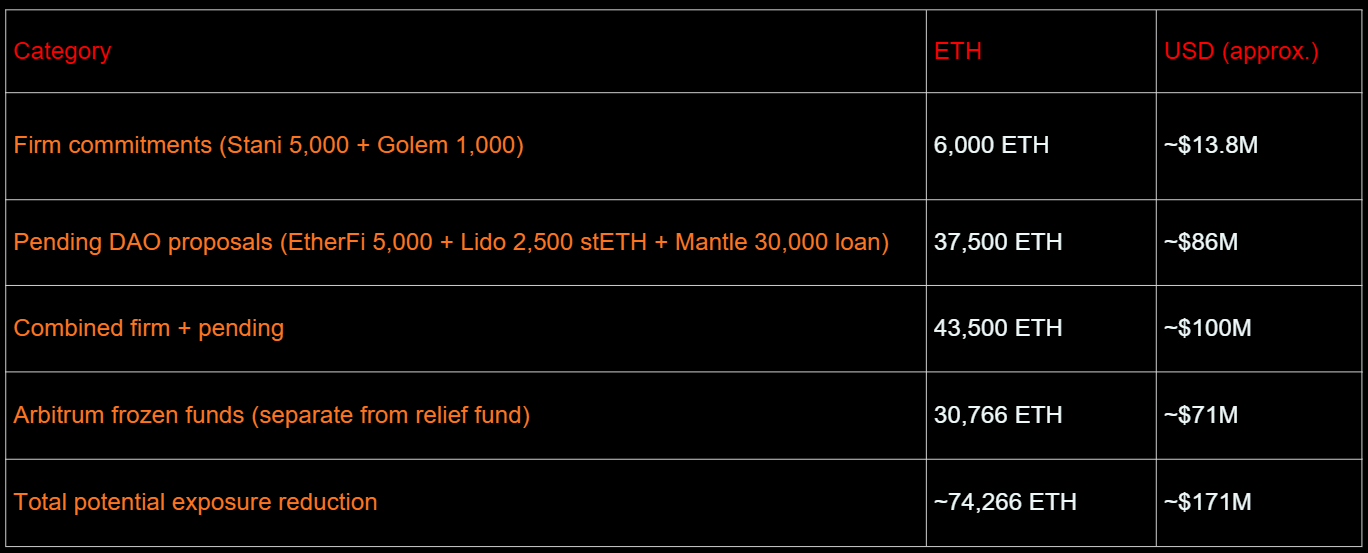
At ~$171M, the total covers the low-end $124M bad-debt estimate but falls short of the $230M worst case, which is why the TBD contributions from Ethena, LayerZero, Frax, INK Foundation, and Tydro still matter.
Why this matters
DeFi United is a real-time stress test of whether "composability" — long a marketing line — translates into actual solidarity when one protocol's failure bleeds into a dozen others. Until this week, it hadn't.
If the relief vehicle closes the hole without triggering forced liquidations, industry-funded recapitalization of impaired collateral will become the playbook for the next major exploit. If it fails, expect a sharp retreat from liquid restaking tokens as collateral and much more conservative risk parameters across lending markets.
The attack vector itself has already reshaped the governance conversation. The exploit wasn't a bug in Aave, Kelp or LayerZero individually — it was a single configuration choice (the 1-of-1 DVN) that turned a widely integrated token into a systemic single point of failure. Proposals mandating minimum verifier requirements for bridged collateral are expected across DeFi in the coming weeks.
What to watch next
DAO votes on Lido, EtherFi, Mantle and Frax proposals over the next 7–14 days
KelpDAO's allocation decision — whether losses are socialized across all rsETH holders (~15% depeg, ~$124M bad debt) or isolated to Layer 2 deployments (up to ~$230M concentrated on Arbitrum and Mantle)
Aave's Umbrella reserve — its first real-world stress test; depositors in the aWETH Umbrella vault face automatic slashing if DeFi United contributions fall short
New participants — Aave has said more commitments are being formalized; expect announcements through late April
📬 Stay ahead of the next DeFi story. The next exploit, bailout, or breakout protocol is already forming on-chain. Subscribe for weekly DeFi news, deep-dive analysis, and early signals on the stories that will actually matter — delivered straight to your inbox. No noise, no shilling.
Subscribe here → (LINK)
