
Trump's Crypto Summit: Clarity Act Pressure, a Bitcoin Buy-In Tease, and Hyperliquid's Path Onshore
Bitcoin reserve talk, a Hyperliquid onshoring push, and a deadline for the Clarity Act — the August 19 summit packed in more policy signals than any crypto event this year.
TL;DR:
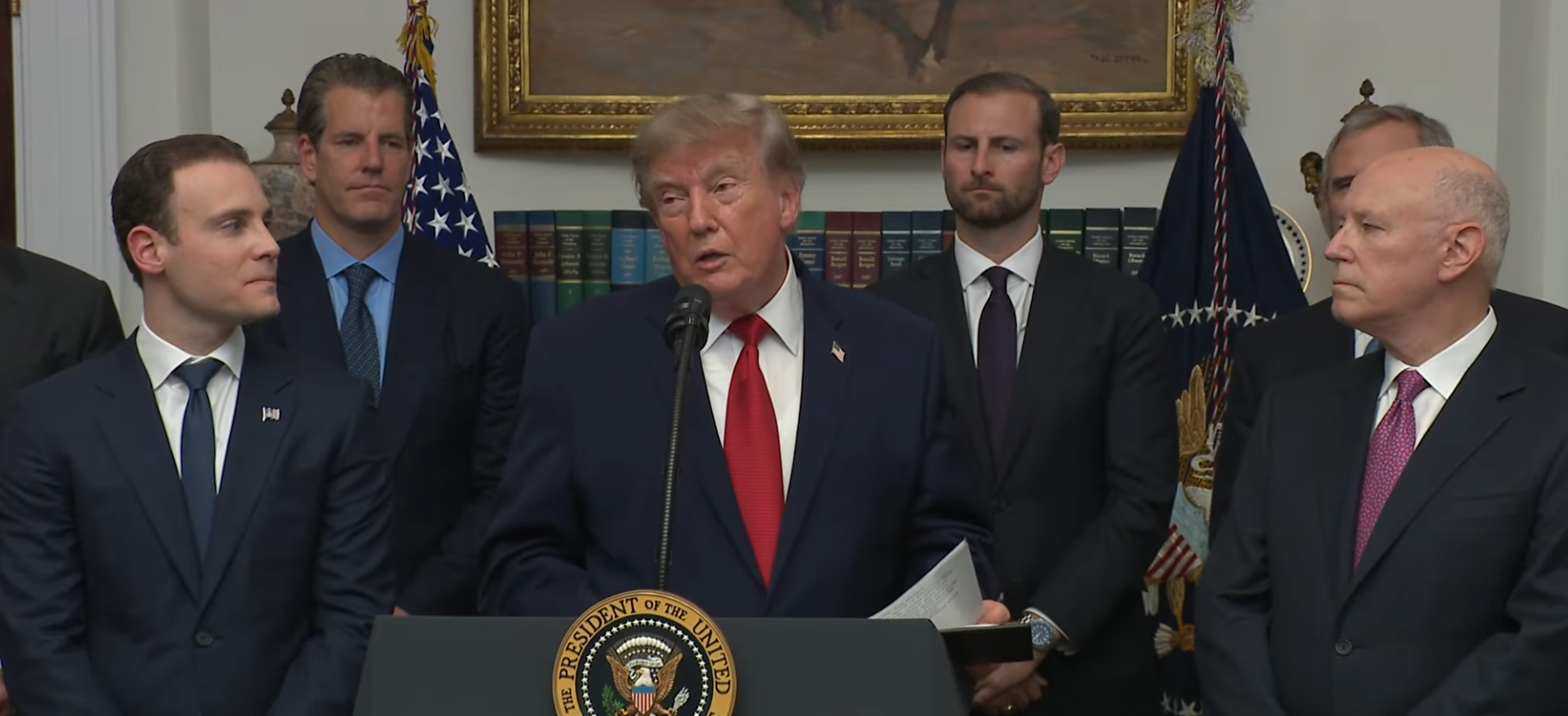
President Trump hosted top crypto and finance executives at the White House on August 19, framed as a kickoff for the CFTC's new Innovation Advisory Committee.
The biggest market mover was Trump confirming CFTC Chair Mike Selig is working to bring offshore derivatives platform Hyperliquid onshore — HYPE jumped roughly 15-19%.
Trump pushed Congress to pass the Clarity Act, pressed on a possible bigger Bitcoin Reserve, and touted the GENIUS Act's stablecoin framework, while the SEC unveiled new capital-raising rules for crypto projects the day before.
Crypto's biggest names sat down with President Trump in the Roosevelt Room on Wednesday, and the read-through hit almost every corner of the industry — from bitcoin reserves to stablecoins to a formerly offshore-only trading platform. Coinbase's Brian Armstrong, Ripple's Brad Garlinghouse, Robinhood's Vlad Tenev, Kraken's Arjun Sethi, the Winklevoss twins, and Chainlink's Sergey Nazarov were in the room alongside regulators including SEC Chair Paul Atkins, CFTC Chair Mike Selig, Treasury Secretary Scott Bessent and Commerce Secretary Howard Lutnick.
Officially, the meeting served as a lead-in to the first meeting of the CFTC's new Innovation Advisory Committee on Thursday. In practice, it doubled as a policy status report and a wish list for what comes next.
Hyperliquid: the line that moved markets
Trump said CFTC Chair Selig is "working very hard" to bring offshore derivatives platform Hyperliquid into the U.S. "in a fully compliant and legal fashion." HYPE jumped 11% on the remark. No approval or timeline was announced, and Hyperliquid's model (no KYC/AML) would need real structural changes to operate onshore.
This is one of the clearest signals yet that regulators want offshore derivatives volume back under U.S. oversight. If it happens, it could reshape where global perps trading lives; if not, it was a free market-moving statement.
The Clarity Act Push
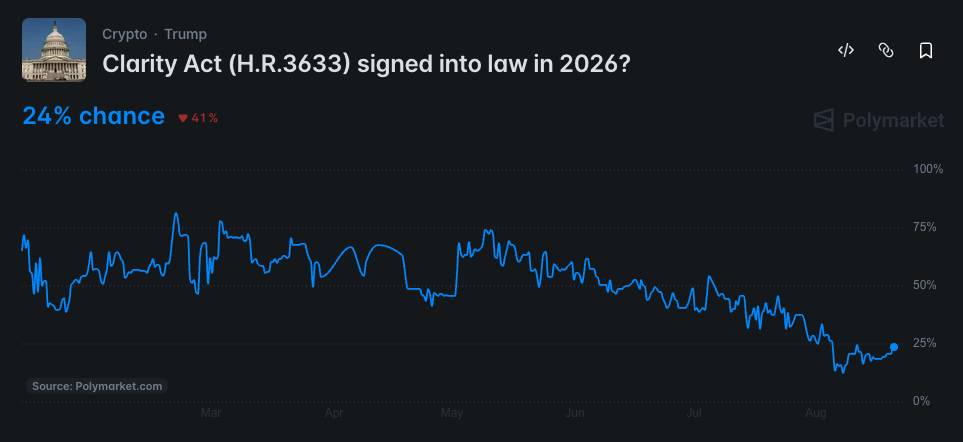
Trump called on the Senate to pass what he called a "fair version" of the Clarity Act (formally the Digital Asset Market Clarity Act), the bill meant to settle when a token counts as a security under the SEC versus a commodity under the CFTC. It already cleared the House; the Senate version has been snagged on ethics provisions tied to officials' own crypto holdings. Armstrong used the moment to push for a September 15 procedural vote, arguing that big banks are dragging their feet because they don't want competition.
What you must know: the bill needs 60 votes to clear the Senate, and Republicans are reportedly still short by around six Democratic votes. A procedural vote is now expected in mid-September, right before Congress breaks again until after the midterms — meaning this could be the last real window to pass it in 2026.
Prediction markets aren't optimistic: Polymarket odds of passage this year sit around 19-20%, down sharply from 82% back in February. Passing it would lock the administration's crypto-friendly stance into durable law. Failing again means the SEC/CFTC keep legislating by rulemaking instead — faster, but easier for a future administration to reverse.
Bitcoin Reserve — No New Buys, But the Door's Open
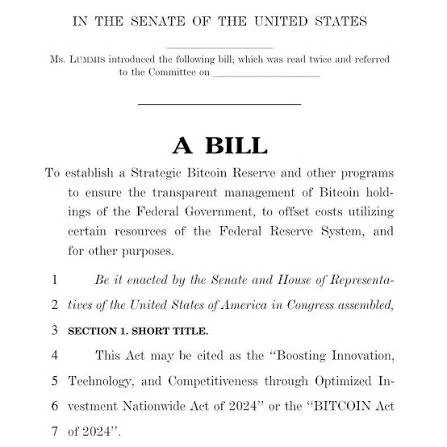
Trump talked up the Strategic Bitcoin Reserve, established by executive order last year and funded so far mostly with seized bitcoin, plus a separate Digital Asset Stockpile for other tokens. When asked about the government buying more crypto outright, Trump said it "has been talked about" and that he'd defer to recommendations from Atkins and the room — but announced nothing concrete. He also repeated that crypto has taken pressure off the dollar rather than threatened it.
This specific exchange wasn't confirmed by reporters who were physically in the room, so treat it as an open door, not a policy shift. Even a hedged comment like this keeps alive the idea of the government as a future buyer, which markets tend to price in as a floor — but there's no funding mechanism or formal proposal yet.
Stablecoins, SEC Rules, and Everything Else
Trump name-checked the GENIUS Act, the stablecoin law he signed roughly a year ago, as proof the dollar-pegged token market now has a federal framework. A day earlier, the SEC had proposed new fundraising exemptions making it easier for crypto projects to raise capital without full securities registration — part of what Atkins is calling "Project Crypto."
Selig separately listed a scorecard of wins: the first CFTC-approved bitcoin perpetual futures contract, protections for software developers, and a defense of federally regulated prediction markets against state-level challenges. Tokenized stocks, AI compute, and keeping ahead of China came up too, but stayed at the level of talking points rather than new policy.
Market Reaction
The summit, combined with the SEC's rule proposal, sent crypto broadly higher: bitcoin rose close to 8% toward $69,000, ether jumped around 18%, and altcoins including XRP and Solana followed. Short positions got liquidated across the board.
What to Watch
The real test is the Senate. If the Clarity Act stalls past Armstrong's September 15 target, most of Wednesday's momentum stays rhetorical. Hyperliquid's actual onshoring path — KYC/AML compliance for a platform built to avoid exactly that — is still undefined. And critics keep flagging Trump's personal financial ties to crypto ventures as a live conflict-of-interest question that isn't going away just because the administration calls the "war on crypto" over.
This recap is based on summit coverage and commentary circulating as of August 20, 2026; details on implementation and timelines remain fluid.
